

Why Now Is the Perfect Time to Begin
Have you ever watched pickleball and thought, “That looks like fun — but I’m probably too old to start something new”?
We hear that a lot. And we’re here to tell you: you’re not.
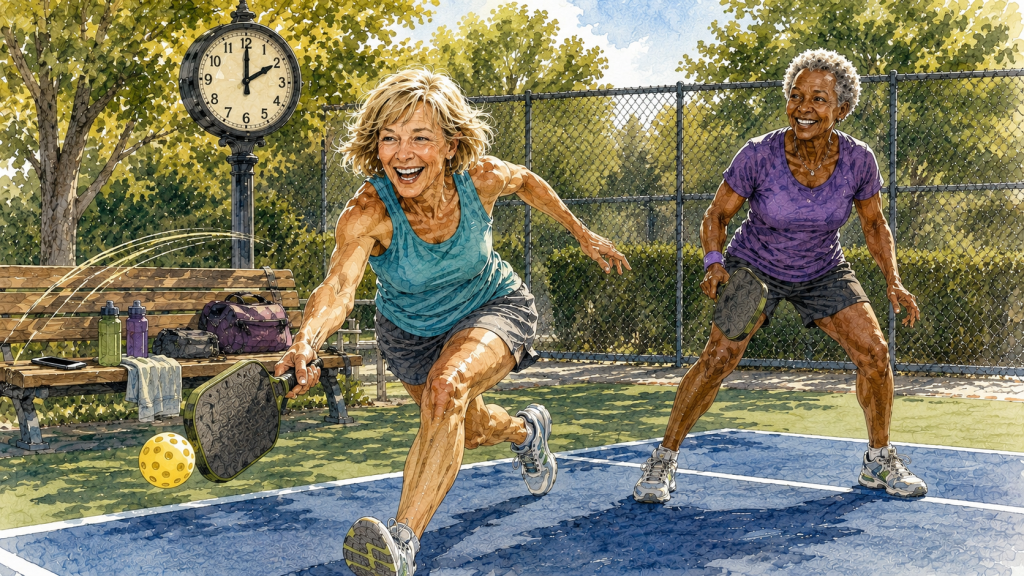
Every week, adults in their 50s, 60s, 70s — and beyond — are stepping onto a pickleball court for the very first time. Some haven’t played a sport in decades. Some have never considered themselves athletes at all. And within a few weeks? They can’t imagine their lives without it.
If you’ve been thinking about trying pickleball, we want you to know that this might be the best time to make that happen. But we also understand the hesitations. So we’ve put together everything you need to know to make your first step with confidence.
The Real Reason Everyone Is Playing (Spoiler: It’s Not Just the Sport)
If you’ve noticed pickleball popping up everywhere lately, there’s a reason — and it’s not just the sport itself.
Yes, it’s fun. Yes, it’s great exercise. But the real reason adults over 50 are showing up in droves? The people.
There’s something about pickleball that just brings out the best in folks. Players cheer for each other, help newcomers learn the ropes, and genuinely seem happy to be there. After a game, people linger. They grab coffee. They make plans for next week.
When you step onto a pickleball court, you’re not just joining a sport. You’re walking into a ready-made community. And for most players, that connection becomes just as important as the game itself.
Research on healthy aging consistently points to one critical factor that goes beyond diet and exercise: connection. Staying socially engaged, feeling like you belong somewhere, having people who notice when you’re not around — these things matter enormously for how we feel and how we age.
Pickleball, without anyone really planning it, has become one of the best answers to that need. On a court, you’re not just a person exercising alone. You’re someone’s partner. Someone’s opponent. Someone people are happy to see walk through the gate.
It’s no wonder so many people tell us: “I wish I had started sooner.”
The Biggest Barrier Is Smaller Than You Think
Here’s what we know: The hardest part isn’t learning pickleball. It’s showing up that first time.
Everyone remembers being new. Every single player on the court was once exactly where you are — nervous about stepping onto the court, unsure of the rules, wondering if they’d be any good, hoping they wouldn’t embarrass themselves.
And they survived. More than survived — they thrived.
Pickleball has a beautiful culture of patience with beginners, because everyone remembers what it felt like to be one. Players here aren’t competing with newcomers — they’re rooting for them.
You don’t need to be good to start. You just need to start.
The truth is: you don’t need to be in shape to begin pickleball — that’s the whole point. The pickleball court is where the getting active happens. You don’t need to arrive in shape. You need to arrive.
Pickleball meets you exactly where you are. If you haven’t exercised much recently, that’s okay — the pace and format of the game lets you ease in at your own level. You’ll move more than you think, rest when you need to, and find that your stamina builds naturally over time.
What You Actually Need to Get Started
Here’s the beautiful part: you don’t need much to begin.
A Good Coach Is Worth More Than an Expensive Paddle
Could you teach yourself pickleball by just watching YouTube and jumping in? Sure. Some people do. But here’s what we’ve seen over and over: players who take even a few beginner lessons at the start tend to progress faster, enjoy themselves sooner, and avoid frustrating habits that are hard to unlearn later.
A good coach sees things you can’t see yourself. They catch a grip issue before it becomes a chronic problem. They explain the strategy behind the basics so the game starts to make sense faster. You don’t have to commit to weekly lessons forever, but investing in a few good ones at the beginning? It’s one of the smartest things a new player can do.
What Gear Actually Matters
You don’t need to spend a fortune on equipment. Most places that offer lessons have loaner paddles you can use for free. Before you spend $200 on a paddle, give yourself a few weeks to play and discover what kind of player you are.
But here’s one place we’d encourage you to invest: good court shoes. Regular sneakers are designed to move forward. Court sports involve lateral movement — side to side, quick stops, pivoting. Without the right support, that puts extra stress on your ankles and knees. A decent pair of court shoes changes everything. You feel more stable, more confident, and a whole lot less likely to slip or strain something.
The Mindset That Ensures Success
Your first serve that actually landed in. Your first rally that lasted more than three hits. Your first game. Your first point you won with a shot you meant to hit. These moments matter. Please don’t rush past them.
It’s easy to focus on how far you still have to go and overlook how far you’ve already come. But those small victories? They’re not just milestones on the way to something bigger. They’re the whole thing. They’re what the journey is made of.
Every advanced player remembers these moments. The first time something clicked. The first time they felt like a pickleball player. Celebrate them. Tell the person next to you. Let yourself feel good about it. You’re building something real, one small win at a time. And that’s worth acknowledging.
You Don’t Need to Be in Shape to Start
“I’ll try pickleball once I get a little more active.” We hear this often. And we always say the same thing: the pickleball court is where the getting active happens. You don’t need to arrive in shape. You need to arrive.
Pickleball meets you exactly where you are. If you haven’t exercised much recently, that’s okay—the pace and format of the game lets you ease in at your own level. You’ll move more than you think, rest when you need to, and find that your stamina builds naturally over time. The players around you aren’t judging your fitness level. They remember their own first weeks on the court. There’s no prerequisite for beginning. There’s just that first step. The court is ready for you. Are you ready for the court?
What the Research Says
We talk a lot about the physical benefits of pickleball—the movement, the balance, the cardiovascular exercise. And those things are real. But there’s something else happening on the court that doesn’t get enough credit.
Research on healthy aging consistently points to one thing beyond diet and exercise: connection. Staying socially engaged, feeling like you belong somewhere, having people who notice when you’re not around—these things matter enormously for how we feel and how we age. Pickleball, without anyone really planning it, has become one of the best answers to that need.
On a pickleball court, you’re not just a person exercising alone. You’re someone’s partner. Someone’s opponent. Someone people are happy to see walk through the gate.
The Full Picture of Health
- New friendships that actually stick
- Laughter—more than you might expect
- A community that shows up for each other
- Better balance and coordination
- Improved cardiovascular health
- Enhanced mental engagement and strategy
Your health isn’t just physical. This is the part that feeds the rest.
Pickleball Is Exercise for Your Mind Too
People come to pickleball for the physical benefits. But a lot of them stay—at least partly—because of what it does for their brain. Every single point is a small puzzle. Where is the ball going? Where should I move? What’s my partner doing? What shot makes sense here? What will they expect—and what might surprise them?
That kind of active thinking keeps your mind sharp in a way that’s almost impossible to replicate on a treadmill. You’re not just moving your body. You’re strategizing, reading people, making quick decisions, and adapting in real time. For a lot of senior players, that mental engagement is one of the most unexpected—and most valued—parts of the game. It’s not just good for you. It’s genuinely interesting. And that combination is pretty hard to beat.
The Bottom Line
There’s one thing we hear more than almost anything else from new players—usually within the first few months of someone starting to play. “I wish I had started sooner.” Not because they regret waiting. But because now that they’re here, they genuinely can’t imagine not being part of this.
They’ve found people they look forward to seeing. They’ve found something that gets them moving without feeling like a chore. They’ve found a version of themselves that still learns new things, still improves, still has fun. That’s what pickleball does. Not just for the body. For the spirit.
Healthy aging isn’t built from one dramatic decision. It’s built from small choices, made regularly, over time. One lesson. One morning on the court. One new friendship made over a post-game coffee. One week of showing up that turns into a habit that turns into a lifestyle. That’s how it works. Not with a dramatic turning point, but with a quiet, consistent choice to keep moving—and to do it alongside people who are making the same choice.
Pickleball has become part of that story for thousands of people. Not because it’s a miracle. But because it makes the healthy choice feel like the enjoyable one.
Ready to Take the First Step?
If you’ve been thinking about trying pickleball, let this be your sign. We’d love to have you. Keep choosing movement. Keep choosing community. Keep choosing health. One small step at a time.